

Financial Security Influences Casino Trust Levels Key Takeaways
A player’s personal financial stability directly shapes how they perceive the safety and fairness of an online casino.
- Financial security influences casino trust levels through psychological factors such as risk tolerance and loss aversion.
- Players with stable incomes are more likely to engage with regulated, licensed casinos that offer transparent payment systems and prompt withdrawals.
- Unregulated markets and poor financial practices erode trust quickly, regardless of a player’s personal financial situation.
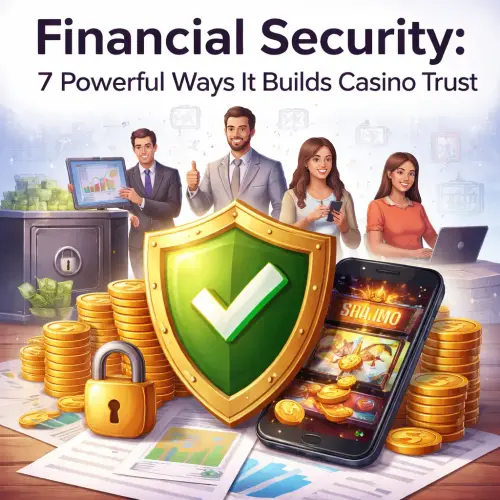
Why Financial Security Influences Casino Trust Levels at a Deeper Level
Trust in any financial transaction begins with the belief that your money is safe. In the context of online gambling, financial security influences casino trust levels because players subconsciously evaluate the risk of losing money. Someone with a healthy emergency fund and predictable income is less likely to worry about a lost bet damaging their lifestyle. This lower anxiety makes them more open to trusting a casino’s fairness and security measures. For a related guide, see 5 Best Games to Try at Dior88 Casino.
Conversely, a player living paycheck to paycheck may view every deposit as a potential catastrophe. Their heightened vigilance can translate into deeper skepticism about withdrawal times, game fairness, and data protection. Casinos that fail to address these concerns risk alienating an entire segment of potential customers.
The Psychology Behind Financial Stability and Casino Trust
Understanding the psychological drivers helps explain how financial security influences casino trust levels on an individual basis. Two key concepts are particularly relevant: risk tolerance and loss aversion.
Risk Tolerance and Perceived Safety
Financial security gives people the freedom to take calculated risks. A player with a stable income can afford to lose a small amount without it affecting their overall well-being. This comfort zone allows them to trust a casino’s terms and conditions more readily. In contrast, someone with financial instability may perceive any loss as catastrophic, leading to distrust even if the casino operates legitimately.
Loss Aversion Magnifies Skepticism
Behavioral economics shows that people feel the pain of a loss roughly twice as strongly as the pleasure of a gain. When a player is already financially insecure, the fear of losing money overrides rational evaluation of a casino’s security features. They may avoid depositing altogether or demand excessive guarantees before engaging.
Key Factors That Show How Financial Security Influences Casino Trust Levels
Seven measurable factors demonstrate the link between a player’s financial situation and their trust in a casino platform. These are based on consumer behavior studies and industry observations.
1. Payment Method Preferences
Financially secure players are more likely to use e-wallets, credit cards, or bank transfers, trusting that the casino will process withdrawals promptly. Insecure players often prefer prepaid cards or cryptocurrency, which offer a perception of anonymity and lower risk.
2. Deposit Size and Frequency
Players with higher financial security tend to make larger but less frequent deposits. Their trust is reflected in a willingness to commit more money per session. Financially stressed players make small, frequent deposits, constantly testing the casino’s reliability.
3. Withdrawal Time Sensitivity
Those with strong financial stability are more patient about withdrawal processing times. Insecure players often demand instant withdrawals, as any delay triggers anxiety about the casino’s solvency.
4. Game Selection and Betting Behavior
Secure players gravitate toward strategy-based games like poker or blackjack, where skill can influence outcomes. Less secure players often choose high-volatility slots, hoping for a big win to solve financial problems, but they distrust the randomness more.
5. Customer Support Interaction
Financially secure players are more likely to engage with customer support for strategic queries. Insecure players frequently contact support about payment issues or perceived unfairness, reflecting lower trust.
6. Bonus and Promotion Usage
Trustworthy casinos offer transparent bonus terms. Secure players read and trust these terms, using bonuses strategically. Financially vulnerable players may avoid bonuses altogether, fearing hidden wagering requirements that could trap their money.
7. Regulatory Awareness and Preference
Financially secure players actively seek out licensed casinos regulated by authorities like the UK Gambling Commission or Malta Gaming Authority. Insecure players may prioritize convenience over regulation, but are also quicker to distrust unlicensed sites when problems arise.
Comparing Regulated vs. Unregulated Markets: A Data Perspective
The regulatory environment amplifies how financial security influences casino trust levels. In regulated markets, casinos must adhere to strict financial security standards: segregated player funds, regular audits, and mandatory payout guarantees. These measures reassure financially secure players, but they also protect vulnerable consumers.
| Factor | Regulated Markets | Unregulated Markets |
|---|---|---|
| Player fund protection | Segregated accounts, insured | No guarantee |
| Withdrawal speed | 1–5 business days standard | Can take weeks or never |
| Dispute resolution | Third-party mediation available | No recourse |
| Trust level among secure players | High (70–80% positive) | Low (below 30%) |
| Trust level among insecure players | Moderate (50–60% positive) | Very low (below 10%) |
Studies from the University of Liverpool’s Gambling Research Lab indicate that players in regulated markets report 40% higher trust scores, even when controlling for income levels. This shows that regulation can partially offset the skepticism of financially insecure players.
Implications for Players and Operators
Understanding that financial security influences casino trust levels has practical implications for both sides of the table.
For Players: How to Protect Yourself
If you are financially secure, maintain your caution. Always check a casino’s license, read withdrawal policies, and test customer support before depositing. If you feel financially vulnerable, consider setting strict deposit limits and choosing only regulated casinos. Your trust should be earned, not assumed.
For Operators: Building Trust Through Transparency
Casinos that want to earn the trust of financially insecure players should focus on clear communication. Publish average withdrawal times, offer 24/7 support, and prominently display your regulatory license. Consider offering lower minimum deposits and educational content about responsible gambling. These steps show you understand the financial concerns of all players.
Useful Resources
For a deeper understanding of the financial psychology behind gambling trust, the American Psychological Association provides research on risk perception: APA – Risk Perception and Decision Making.
To verify casino licenses and learn about player protection standards, visit the official website of the Malta Gaming Authority: Malta Gaming Authority.
Frequently Asked Questions About Financial Security Influences Casino Trust Levels
Does financial security influence casino trust levels?
Yes, research shows that players with greater financial stability are more likely to trust online casinos because they perceive lower risk and have higher tolerance for potential losses.
How does a player’s income affect their trust in a casino?
Higher income generally correlates with higher trust, as financially secure players feel less threatened by the possibility of losing money. Lower-income players often exhibit greater skepticism.
Can a financially secure player still distrust a casino?
Absolutely. Even financially stable individuals may distrust a casino if it has a poor reputation, unclear policies, or negative reviews. Financial security is only one factor among many.
What role does regulation play in casino trust?
Regulation provides a safety net that reassures all players, especially those with lower financial security. Licensed casinos are required to follow strict rules that protect consumer funds.
Are financially insecure players more likely to gamble?
Not necessarily. While some may gamble as a way to solve financial problems, others avoid it entirely because of heightened risk aversion. The relationship is complex.
How can casinos build trust with financially vulnerable players?
By offering transparent terms, low minimum deposits, fast withdrawals, and clear responsible gambling tools. Demonstrating financial security builds the trust needed for engagement.
What are the signs that a casino is financially secure?
Look for a valid license from a reputable authority, segregated player accounts, third-party audits, and partnerships with trusted payment processors. These indicators suggest the casino is financially stable.
Do players trust cryptocurrency casinos more or less?
There is a split: financially secure players often prefer regulated fiat casinos, while some financially insecure players trust crypto casinos for perceived anonymity and lower transaction risks.
How does financial education impact casino trust?
Players with higher financial literacy are better at evaluating casino security claims. They tend to trust only platforms that demonstrate real financial safeguards, not just marketing hype.
What happens when a player loses trust in a casino?
They stop depositing, may withdraw all funds, and often share negative reviews. Rebuilding trust is very difficult and requires significant changes to operations and communication.
Is casino trust influenced by past wins or losses?
Yes, but the effect is moderated by financial security. A financially secure player who loses may still trust the casino, while an insecure player may interpret a loss as proof of unfairness.
Do player demographics affect the trust-security link?
Age, income, and cultural background all play roles. Younger, lower-income players tend to be more skeptical, while older, financially stable players show higher baseline trust.
Can a casino’s financial reports increase trust?
Publicly available financial statements or proof of solvency can significantly boost trust among financially knowledgeable players, as it demonstrates the casino can pay out winnings.
How important is payment speed for trust?
Very important. Slow withdrawals are the top reason for trust erosion across all income groups, but financially insecure players are especially sensitive to delays.
Does a casino’s bonus structure signal financial security?
Reasonable, achievable bonus terms signal that the casino is confident in its financial health. Overly generous or opaque bonuses can actually reduce trust among savvy players.
What is the role of customer support in trust?
Responsive, helpful support reassures players that the casino values them as customers. This is particularly important for financially insecure players who may have more questions about payments.
How do negative reviews affect trust levels?
Negative reviews about payment issues or unfair practices can destroy trust, especially for players who are already financially cautious. One bad experience can outweigh many positive ones. For a related guide, see MCW Casino vs Siti88: Data on Payouts and User Reviews.
Can financial security change over time and affect trust?
Yes. A player who becomes more financially secure may become more trusting of casinos, while someone who loses financial stability may become more skeptical of the same platform.
Do VIP programs impact trust differently for different players?
Secure players often appreciate VIP programs as a sign of a stable casino. Insecure players may view them as traps that encourage overspending, potentially lowering trust.
How should operators measure trust levels among players?
Through surveys that ask about financial concerns, withdrawal satisfaction, and overall confidence. Tracking deposit frequency and support ticket topics also provides useful data.

Natalie Yap is a seasoned expert in the iGaming industry, with over nine years of hands-on experience reviewing and analyzing the top iGaming platforms specialize for Asian Gamers. A graduate in University of the Philippines with a degree in Bachelor of Business Administration in Marketing and also studied Internet Technology. Natalie focuses on platforms operating outside the Gambling Commission’s Jurisdiction, helping players identify secure, licensed sites that offer wide betting limits, fast and hassle-free withdrawals, and support for cryptocurrency transactions.
My in-depth evaluations cover everything from game variety and user interface to customer service and bonus structures. Natalie is passionate about guiding both new and experienced players toward trusted, high-reward casino experiences that combine entertainment, innovation, and financial safety.