


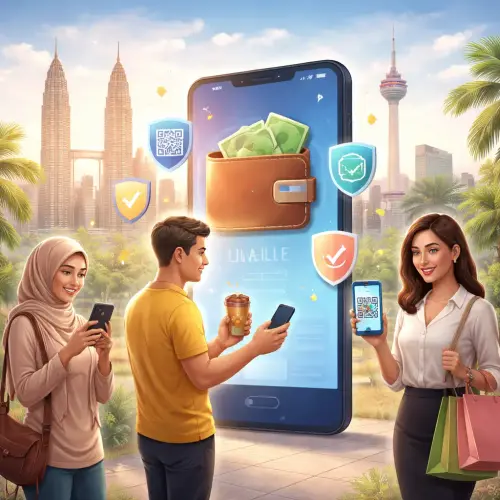
Why Digital Wallets Are Growing in Malaysia Key Takeaways
Malaysia’s shift toward cashless payments has accelerated dramatically in recent years, with millions of users now relying on e-wallets for daily transactions.
- Driven by smartphone penetration, merchant adoption, and government support, digital wallet Malaysia usage has nearly doubled since 2020.
- Security features like tokenization, biometric authentication, and fraud monitoring are boosting consumer trust.
- Small and medium enterprises (SMEs) benefit from lower overhead costs, faster settlements, and access to new customer segments.
What Is Driving the Rapid Adoption of Digital Wallets in Malaysia?
Several interconnected factors explain why digital wallets are growing in Malaysia at such a striking pace. Understanding these drivers gives both consumers and businesses a clearer picture of where the market is headed. For a related guide, see Royale Win Games Payment Transaction: Guide for Safe Deposits and Withdrawals.
Government Initiatives and Infrastructure
Bank Negara Malaysia has actively promoted a cashless society through initiatives like the Interbank GIRO (IBG) and Real-Time Retail Payments Platform (RPP). The introduction of DuitNow, a national QR payment standard, has made it simple for users to transfer money across different e-wallet platforms instantly. This interoperability removes a major barrier that once slowed e-wallet adoption in other countries. For a related guide, see Online Casino Malaysia: Expert Review, Features and Player Guide 2026.
Smartphone and Internet Penetration
Over 90% of Malaysians own a smartphone, and mobile internet coverage reaches even rural areas. This widespread connectivity means that almost anyone with a phone can download an e-wallet app and start transacting within minutes. For the unbanked and underbanked, e-wallets offer a first step into formal financial services.
COVID-19 as a Catalyst
The pandemic accelerated contactless payment adoption as consumers prioritised hygiene and social distancing. Many retailers that previously accepted only cash quickly integrated digital wallet Malaysia solutions like Touch ’n Go eWallet, GrabPay, and Shopee Pay. This shift created a lasting habit: even after restrictions lifted, users continued to pay with their phones out of convenience.
5 Smart Benefits of Using Digital Wallets in Malaysia
Beyond the macro trends, individual users enjoy tangible advantages that explain why digital wallets are growing in Malaysia from a consumer perspective.
1. Unmatched Convenience and Speed
No more fumbling for exact change or waiting for a card machine to process. With a tap or a QR scan, payments complete in under two seconds. Whether you’re buying nasi lemak at a roadside stall or paying at a luxury boutique, the process remains equally swift.
2. Attractive Rewards and Cashback
Most e-wallets offer loyalty points, cashback, and exclusive discounts. Touch ’n Go eWallet, for example, frequently runs promotions like “RM5 cashback on your next three purchases.” Over time, these rewards can add up to meaningful savings for regular users.
3. Enhanced Security Features
Modern e-wallets employ multi-layered security: tokenisation ensures your actual card number is never shared; biometric logins (fingerprint or face recognition) prevent unauthorised access; and real-time transaction alerts let you spot suspicious activity immediately. If your phone is lost, you can remotely lock or wipe the app.
4. Budgeting and Expense Tracking
Most wallets provide a transaction history categorised by merchant type, making it easy to see exactly where your money goes. Some apps even generate monthly spending reports, helping users stick to a budget without manual effort.
5. Access to a Broader Financial Ecosystem
E-wallets now integrate with investment platforms, insurance products, and micro-loans. For instance, BigPay allows users to buy travel insurance directly, while GrabPay lets you invest spare change. This convergence makes a digital wallet Malaysia more than a payment tool – it becomes a financial hub.
Benefits for Malaysian Businesses
Understanding why digital wallets are growing in Malaysia requires looking at the business side as well. Small and medium enterprises (SMEs) are reaping significant rewards.
Lower Transaction Costs and Faster Settlements
Accepting e-wallet payments often costs less than traditional credit card processing fees, especially for micro-transactions. Funds typically settle within one working day, improving cash flow for merchants who rely on daily turnover.
Access to Customer Insights
E-wallet platforms provide anonymised data on purchase frequency, average spend, and preferred categories. Retailers can use this intelligence to tailor promotions and stock the right products, increasing sales efficiency.
Attracting New Customer Demographics
Younger Malaysians, particularly Gen Z, often prefer cashless merchants. Displaying an e-wallet logo at the counter signals modernity and convenience, drawing in customers who might otherwise walk past.
Challenges and Considerations for Digital Wallet Growth
No trend is without obstacles. For all the optimism, several challenges could slow the momentum of digital wallet Malaysia adoption.
Digital Divide and Rural Access
Although smartphone penetration is high, internet connectivity in remote areas can be unreliable. Older demographics also tend to trust cash more than digital channels. Bridging these gaps requires continued investment in infrastructure and financial literacy programmes.
Interoperability and Fragmentation
While DuitNow has unified most major wallets, some smaller platforms remain siloed. Users may need multiple apps to cover all their favourite merchants, creating friction that limits mass adoption.
Security and Fraud Concerns
Despite strong encryption, phishing scams and SIM-swap fraud still occur. High-profile incidents can erode consumer confidence quickly. E-wallet providers must stay vigilant and educate users about safe practices.
Future Outlook: What’s Next for Digital Wallets in Malaysia?
Looking ahead, several developments will further shape why digital wallets are growing in Malaysia.
Embedded Finance and Super Apps
Expect e-wallets to evolve into super apps that combine payments, banking, investment, and insurance. Touch ’n Go eWallet already offers micro-insurance and wealth management, and GrabPay is expanding into lending. This all-in-one model increases user stickiness and lifetime value.
Biometric and Biometric-Plus Authentication
Facial recognition and voice authentication will become standard, reducing reliance on PINs and passwords. Some banks are already piloting behavioural biometrics that detect fraud by analysing how a user holds their phone or swipes.
Cross-Border Payment Integration
Malaysia is collaborating with neighbouring countries to enable QR-based cross-border payments. A Malaysian tourist in Thailand could soon pay at a Bangkok market using their local e-wallet. Such interoperability will boost adoption among frequent travellers and migrant workers.
Common Mistakes to Avoid When Choosing a Digital Wallet
To make the most of the digital wallet Malaysia ecosystem, avoid these pitfalls:
- Ignoring fee structures: Some wallets charge for withdrawals, while others offer free transfers. Read the terms carefully.
- Sticking to one wallet: Having two or three wallets gives you access to the best promotions and backup options in case one service is down.
- Neglecting security settings: Always enable two-factor authentication and set a strong PIN. Never share your login details.
- Overlooking merchant acceptance: Check that your preferred wallet is widely accepted at the places you frequent before committing.
Useful Resources
For further reading on digital wallet Malaysia trends and official guidelines, consider these resources:
- Bank Negara Malaysia – Payment Systems Overview – The central bank’s official page on payment infrastructure and regulations.
- Finance Twitter – Digital Wallet Adoption Statistics 2024 – A comprehensive analysis of user growth, transaction volumes, and market share for e-wallets in Malaysia.
Frequently Asked Questions About Why Digital Wallets Are Growing in Malaysia
What is the most used digital wallet in Malaysia?
Touch ’n Go eWallet leads the market with over 30 million registered users, followed by GrabPay and Shopee Pay.
Are digital wallets safe to use in Malaysia?
Yes, reputable e-wallets use encryption, tokenisation, and biometric authentication to protect user data. Users should also practise good security habits.
Do I need a bank account to use a digital wallet?
Many e-wallets allow top-ups at physical kiosks or via cash deposit partners, so a bank account is not strictly necessary.
Can foreigners use Malaysian e-wallets?
Yes, most e-wallets accept foreign passports for verification, though some features may be limited to local residents.
What is DuitNow QR?
DuitNow QR is a national standard that allows users to scan any participating e-wallet’s QR code to make payments, regardless of which app they use.
Is there a transaction limit for e-wallets in Malaysia?
Yes, most e-wallets impose daily or monthly limits (e.g., RM10,000 per day for Touch ’n Go eWallet). Limits vary by provider and account tier.
How do I top up my e-wallet without a debit card?
You can top up at 7-Eleven, FamilyMart, or authorised agents using cash. Some wallets also allow bank transfer or direct salary crediting.
Which industries accept digital wallets most in Malaysia?
F and B, retail, petrol stations, and public transport (e.g., MRT, LRT) have the highest acceptance rates.
Can I use digital wallets for online shopping?
Absolutely. Most e-commerce platforms like Shopee, Lazada, and Zalora accept popular e-wallets at checkout.
Are there any fees for using e-wallets?
Typically, there are no fees for everyday payments. However, cash withdrawals, certain top-ups, and international transactions may incur small charges.
How do digital wallets help businesses reduce costs?
E-wallet transaction fees are usually lower than credit card merchant fees, and there are fewer chargebacks and fraud-related costs.
What happens if I lose my phone with an e-wallet?
Most e-wallets let you remotely lock or wipe the app via a web portal. The funds remain protected by your PIN/biometric lock.
Is there a minimum age to use a digital wallet in Malaysia?
Yes, the minimum age is usually 18. Some wallets offer limited accounts for minors under parental supervision.
Can I earn interest on e-wallet balances?
Standard e-wallet balances do not earn interest. However, some wallets have integrated savings accounts that offer modest interest rates.
How do government initiatives encourage e-wallet usage?
Programmes like e-Tunai Rakyat provided direct cash incentives for using e-wallets, while DuitNow QR standardised payments across the industry.
Are e-wallet transactions subject to GST or SST?
No, the use of e-wallets itself is not taxed. However, the underlying goods and services purchased may still be subject to SST.
What is the difference between an e-wallet and a prepaid card?
An e-wallet is a software-based account on your phone, while a prepaid card is a physical card preloaded with funds. Many wallets issue virtual prepaid cards too.
Can I use an e-wallet to pay for public transport in Malaysia?
Yes, Touch ’n Go eWallet is accepted for MRT, LRT, monorail, and bus services, either via QR code or NFC.
How are e-wallet companies regulated in Malaysia?
They are regulated by Bank Negara Malaysia under the Financial Services Act and must comply with anti-money laundering and data protection laws.
Will cash disappear in Malaysia because of digital wallets?
Unlikely in the short term. Cash remains essential for the unbanked and in rural areas. However, e-wallets will continue gaining market share among urban and digitally savvy populations.

Natalie Yap is a seasoned expert in the iGaming industry, with over nine years of hands-on experience reviewing and analyzing the top iGaming platforms specialize for Asian Gamers. A graduate in University of the Philippines with a degree in Bachelor of Business Administration in Marketing and also studied Internet Technology. Natalie focuses on platforms operating outside the Gambling Commission’s Jurisdiction, helping players identify secure, licensed sites that offer wide betting limits, fast and hassle-free withdrawals, and support for cryptocurrency transactions.
My in-depth evaluations cover everything from game variety and user interface to customer service and bonus structures. Natalie is passionate about guiding both new and experienced players toward trusted, high-reward casino experiences that combine entertainment, innovation, and financial safety.